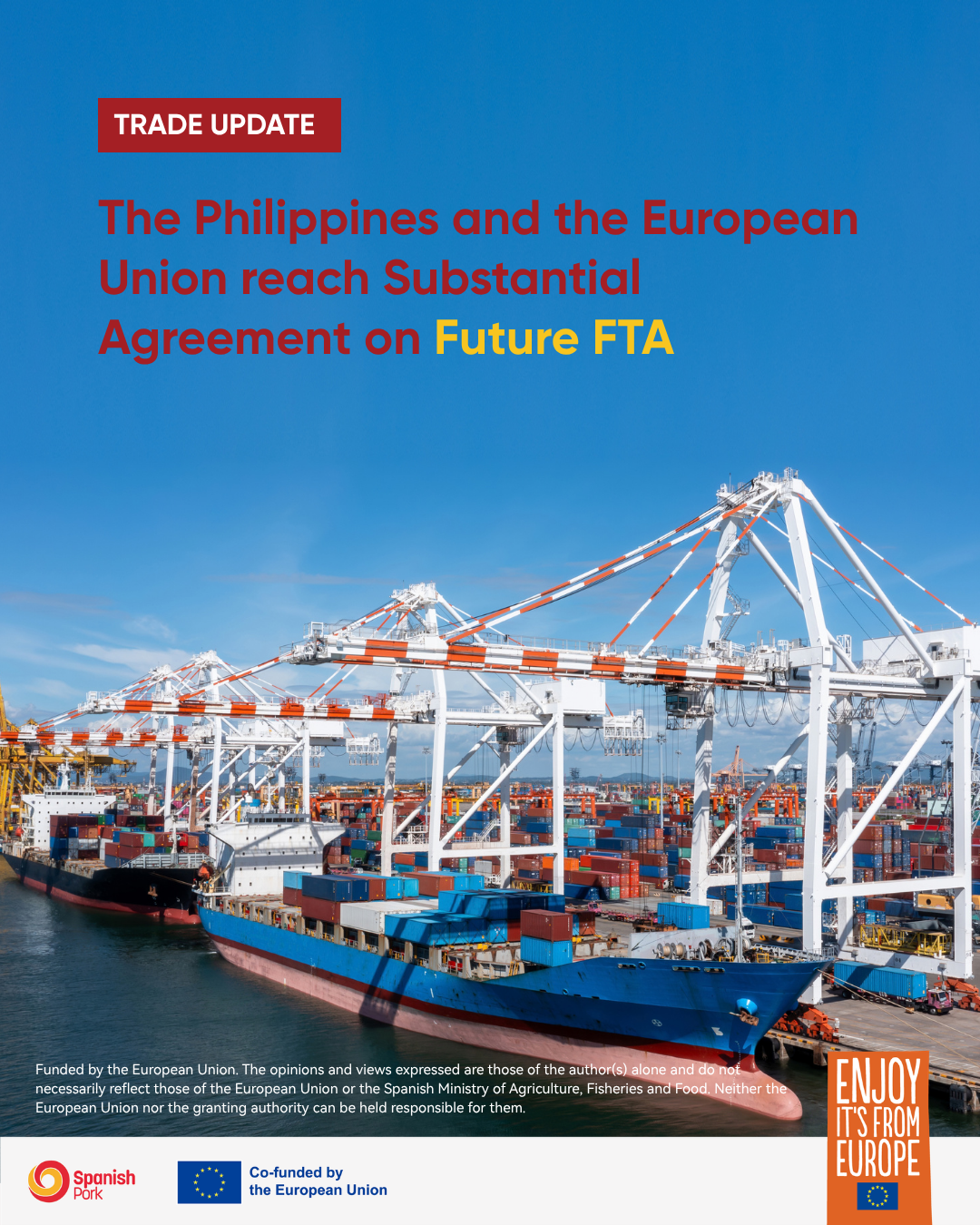
The European Union and the Philippines reached substantial agreement on the core elements of a future trade agreement on 22 September 2026, marking an important milestone in the development of closer trade and economic relations between the two markets, including new opportunities for the European agri-food sector.
A wide-ranging trade agreement
The proposed agreement would liberalise more than 94% of tariff lines and cover over 97% of bilateral trade once fully implemented.
Agri-food products are an important part of EU exports to the Philippines, with meat products, including pork and poultry, among the leading export categories alongside dairy products and other food and beverages. These commercial ties contributed to bilateral trade in goods reaching €17.6 billion in 2025.
For the Philippines, the European Union is one of its largest trading partners and an important destination for Philippine exports.
What it could mean for European pork
The new trade framework could contribute to a more favorable environment for European pork once the agreement is finalised and implemented. It includes tariff preferences for pigmeat, which could improve the conditions for European pork entering the Philippine market.
For European pork producers and exporters, the development is relevant to a market of around 113 million people where imported food products already play an important role.
Stronger protection for European food products
The agreement also includes provisions to protect almost 200 European Geographical Indications (GIs).
Beyond tariffs, the proposed agreement covers a broad range of areas, including sanitary and phytosanitary measures, technical barriers to trade, digital trade, public procurement and sustainability.
These provisions are intended to provide a more predictable framework for trade between the EU and the Philippines.
What comes next?
The agreement marks an important step in EU-Philippines trade negotiations, but the process is not yet complete.
Technical negotiations will continue before the agreement can be formally concluded, followed by the relevant approval and ratification procedures.
For European pork, the inclusion of pigmeat in the proposed tariff preferences makes the ongoing development particularly relevant as the EU and the Philippines continue to strengthen their trade relationship.
Source: European Commission, “Substantial agreement on EU-Philippines trade”